US vs Canadian Building Performance Standards: A Side-by-Side Comparison
US and Canadian Building Performance Standards share the same objective — net-zero by 2050 — but operate through different regulatory structures. Here is how they compare, and why cross-border portfolio owners need both playbooks.
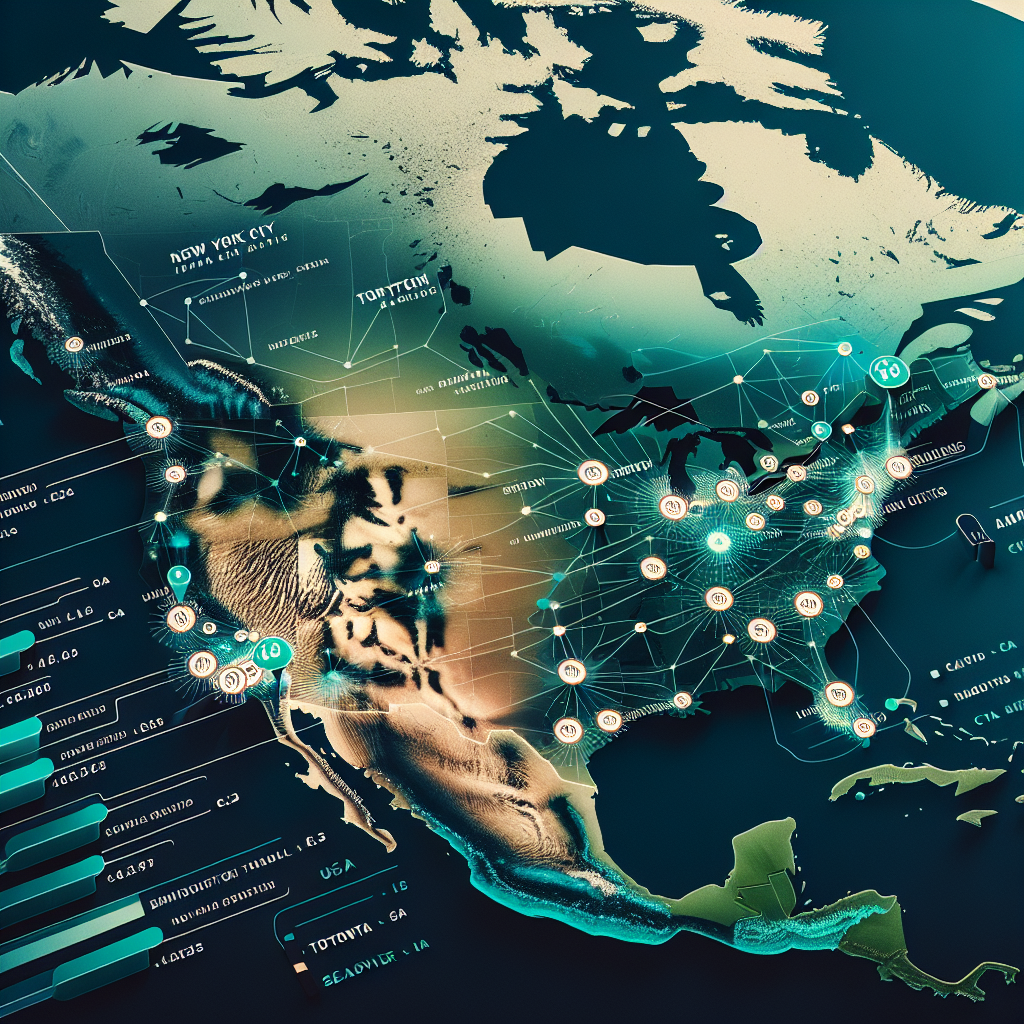
Commercial real estate portfolios increasingly cross the US-Canadian border. A major REIT might own Class A office in Toronto, a Class B portfolio in Manhattan, lab space in Cambridge, and distribution facilities in Vancouver. Each of those assets now falls under a Building Performance Standard framework — but the frameworks differ structurally. This guide provides a clean comparison of US vs Canadian BPS, and the implications for cross-border portfolio owners.
The common objective
Both countries are pursuing net-zero buildings by 2050 (Canada formally; US via state-level commitments and federal signaling). Both are moving from voluntary benchmarking to mandatory disclosure to performance-based standards. The endpoints are aligned.
The paths are different.
US structure: city-led, with state and federal layers
Building Performance Standards in the US are primarily city-led. The federal government (EPA's ENERGY STAR program, SEC disclosure rules, IRS retrofit tax credits) provides infrastructure and incentives, but individual cities pass and enforce the actual performance standards.
Major US BPS cities as of 2026:
- New York City — LL97 (2019, enforced from 2024).
- Boston — BERDO 2.0 (2021, enforced from 2025).
- Washington DC — BEPS (2018, first compliance 2021).
- Denver — Energize Denver (2022).
- Seattle — BEPS (2023).
- St. Louis — BEPS (2020).
- Cambridge, MA — BEUDO (2022).
- Montgomery County, MD — BEPS (2021).
- Chicago, Philadelphia, San Francisco, Minneapolis, Los Angeles, Atlanta — benchmarking laws with BPS under development.
State-level activity:
- California — AB 802 (benchmarking), Title 24 (new construction), emerging state BPS under development.
- Washington — Clean Buildings Act (statewide BPS).
- Massachusetts — state benchmarking and specialized zero-energy code for new construction.
- New York State — statewide decarbonization mandates including the Climate Leadership and Community Protection Act (CLCPA).
The result: patchwork coverage. A building in Manhattan is in LL97; a building in Westchester is in looser New York State rules; a building in Albany has different disclosure requirements. Portfolio owners with assets across a single state can face multiple distinct regulatory regimes.
Canadian structure: federal/provincial/municipal, more centralized
Canadian BPS operates through a different hierarchy:
- Federal level: Net-zero by 2050 commitment in law (Canadian Net-Zero Emissions Accountability Act). National Building Code updates for new construction. ENERGY STAR Portfolio Manager alignment with US.
- Provincial level: Provincial building codes, provincial benchmarking laws (Ontario EWRB, British Columbia Zero Carbon Step Code), provincial climate plans.
- Municipal level: City-specific standards (Toronto EWRB + Toronto Green Standard, Vancouver's Zero Emissions Building Plan, Montreal).
Canada's structure produces more coordination between levels. Federal net-zero targets flow down to provincial codes which flow down to municipal standards. Portfolio owners with assets across a province face one primary framework with municipal layer refinements.
Benchmarking and disclosure
Both countries use ENERGY STAR Portfolio Manager as the primary benchmarking tool. This is a major advantage for cross-border portfolios — a single Portfolio Manager account can manage disclosure across US and Canadian assets.
Reporting cadence is similar (annual) and formats are increasingly aligned. Data quality is similar. The benchmarking infrastructure is the most interoperable layer between the two systems.
Performance standards: current state
Active performance standards (penalties in force):
- NYC LL97 (US) — $268/ton CO₂e over cap.
- Boston BERDO 2.0 (US) — $234/ton CO₂e.
- DC BEPS (US) — $7.50/sq ft or alternative compliance payment.
- Denver Energize Denver (US) — $0.30–$0.70/kBtu.
- Seattle BEPS (US) — up to $10/sq ft.
- Washington State Clean Buildings Act (US) — penalty structure in place.
Performance standards in development (disclosure-only now):
- Toronto EWRB (Canada) — performance targets under development, expected 2027–2030.
- Ontario EWRB — currently disclosure-only.
- Vancouver Zero Emissions Building Plan — phased rollout targeting net-zero by 2030.
- Montreal — performance standards in planning.
As of 2026, active performance-based penalties are concentrated in US cities. Canadian markets are still primarily in disclosure-and-planning phase — but closing the gap rapidly.
Penalty structures compared
| Jurisdiction | Metric | Penalty | Period |
|---|---|---|---|
| NYC LL97 | Carbon | $268/tCO₂e | 5-year compliance periods |
| Boston BERDO 2.0 | Carbon | $234/tCO₂e | 5-year |
| DC BEPS | ENERGY STAR score | $7.50/sq ft | 5-year |
| Denver Energize Denver | EUI | $0.30–$0.70/kBtu | Interim + 2030 |
| Seattle BEPS | Carbon | Up to $10/sq ft | 5-year |
| Toronto EWRB | Disclosure now | Non-disclosure fines only | Annual |
| Ontario EWRB | Disclosure now | $250–$50,000 | Annual |
Grid carbon intensity: a critical difference
Canadian building electrification achieves much greater emissions reductions than US electrification because of grid differences:
- Ontario grid: ~30 kg CO₂e/MWh (nuclear + hydro dominant).
- Quebec grid: ~2 kg CO₂e/MWh (nearly pure hydro).
- BC grid: ~12 kg CO₂e/MWh (hydro).
- NYC grid: ~300 kg CO₂e/MWh (mixed).
- US national average: ~380 kg CO₂e/MWh.
- Coal-heavy US regions (Wyoming, WV): 700+ kg CO₂e/MWh.
Practical implication: a building that electrifies in Ontario or Quebec achieves near-immediate emissions reduction. A building that electrifies in a coal-heavy US region may see modest emissions reduction until grid decarbonizes. This affects retrofit economics in both countries.
Fossil fuel heating dominance
Both countries have significant natural gas heating in existing commercial buildings — but with different policy responses.
US approach: market-based transition, with federal incentives (Inflation Reduction Act heat pump tax credits, utility-specific rebates) and state/local mandates for gas bans on new construction (NYC, Seattle, Berkeley, etc.).
Canadian approach: provincial and federal net-zero commitments that imply heat pump transition, combined with utility-led rebate programs and emerging bans on new fossil fuel heating in some jurisdictions.
The endgame is similar. The pathways differ.
Cross-border portfolio implications
For portfolio owners with assets in both countries:
Reporting infrastructure
One Portfolio Manager account serves both. Property-level data flows into single management dashboard. This is the easiest layer to unify.
Compliance tracking
Multiple regulatory regimes require per-jurisdiction compliance tracking. A NYC office follows LL97 calendar; a Toronto office follows EWRB calendar. Operational complexity multiplies.
Retrofit capital planning
Different compliance timelines mean different capital planning windows per asset. A Class B in NYC might need 2029 capital; a Class B in Toronto might need 2031. Portfolio-level rollout planning must accommodate each jurisdiction.
Lending differences
US and Canadian CRE lenders have different climate underwriting frameworks. US lenders are more advanced in explicit BPS covenants; Canadian lenders are earlier in the cycle. Cross-border refinance packaging can be complex.
Insurance differences
US insurance markets are more stressed in climate-exposed regions. Canadian markets are less extreme but tracking US patterns with a 3–5 year lag.
Tax treatment
US Inflation Reduction Act heat pump and retrofit tax credits are significant. Canadian federal and provincial retrofit incentives are less generous but growing. Retrofit financial modeling differs meaningfully between jurisdictions.
Where the two systems are converging
- Benchmarking tooling — both use ENERGY STAR Portfolio Manager. Interoperability is high.
- Performance-based standards — Canada is catching up to US city-led BPS structure.
- Net-zero targets — both countries target 2050 (Canada formally; US via aggregated state commitments).
- Lender climate underwriting — Canadian lenders are adopting the US framework with a 2–3 year lag.
Where they will remain different
- Regulatory hierarchy — US remains city-led; Canada remains more centralized.
- Grid decarbonization — Canada starts from a dramatically cleaner baseline.
- Insurance market structure — different underwriting practices and reinsurance dynamics.
- Tax incentives — Inflation Reduction Act is distinctively aggressive; Canadian federal incentives are more modest.
Practical advice for cross-border portfolios
1. Unified data infrastructure. Use property intelligence platforms (like ecoMetric) that cover both US and Canadian data — single dashboard, consistent schema, cross-jurisdictional compliance tracking.
2. Per-jurisdiction compliance calendars. Build a portfolio-wide calendar with each asset's BPS deadlines. Don't try to force all assets into a single compliance rhythm.
3. Retrofit capital pipeline by market. Plan retrofits 3–5 years ahead of each jurisdiction's binding deadlines. Don't wait for fines.
4. Specialty financing by market. Develop lender relationships in each jurisdiction — US C-PACE providers, Canadian green mortgage lenders, federal and provincial incentive programs.
5. Insurance diversification. Coastal US assets may require alternative insurance structures; Canadian assets typically use conventional markets.
6. ESG reporting alignment. Investor reporting should consolidate across jurisdictions. Portfolio-level emissions reporting is now expected by most institutional LPs.
The next decade
By 2030, both systems will be in performance-based enforcement across their major cities. Toronto, Vancouver, and Montreal will have active performance penalties. US cities will have tightened their 2030 caps significantly. Canadian federal policy will likely add a national carbon price layer on top of provincial and municipal frameworks.
Cross-border portfolio owners who build unified compliance infrastructure now will be structurally advantaged when the regulatory layer thickens. Those who maintain separate US and Canadian teams with separate tools will face compounding operational costs.
The convergence point is 2050 net-zero. The paths vary, but the destination is shared. Smart CRE professionals build for both systems simultaneously — because in 2026, owning commercial real estate in North America increasingly means owning it on both sides of the border.