Building Performance Standards Explained: LL97, BERDO, EWRB, and More
Over a dozen North American cities now have Building Performance Standards with real financial penalties. Here is how the major BPS laws compare — what they require, who's covered, and what the fines look like.
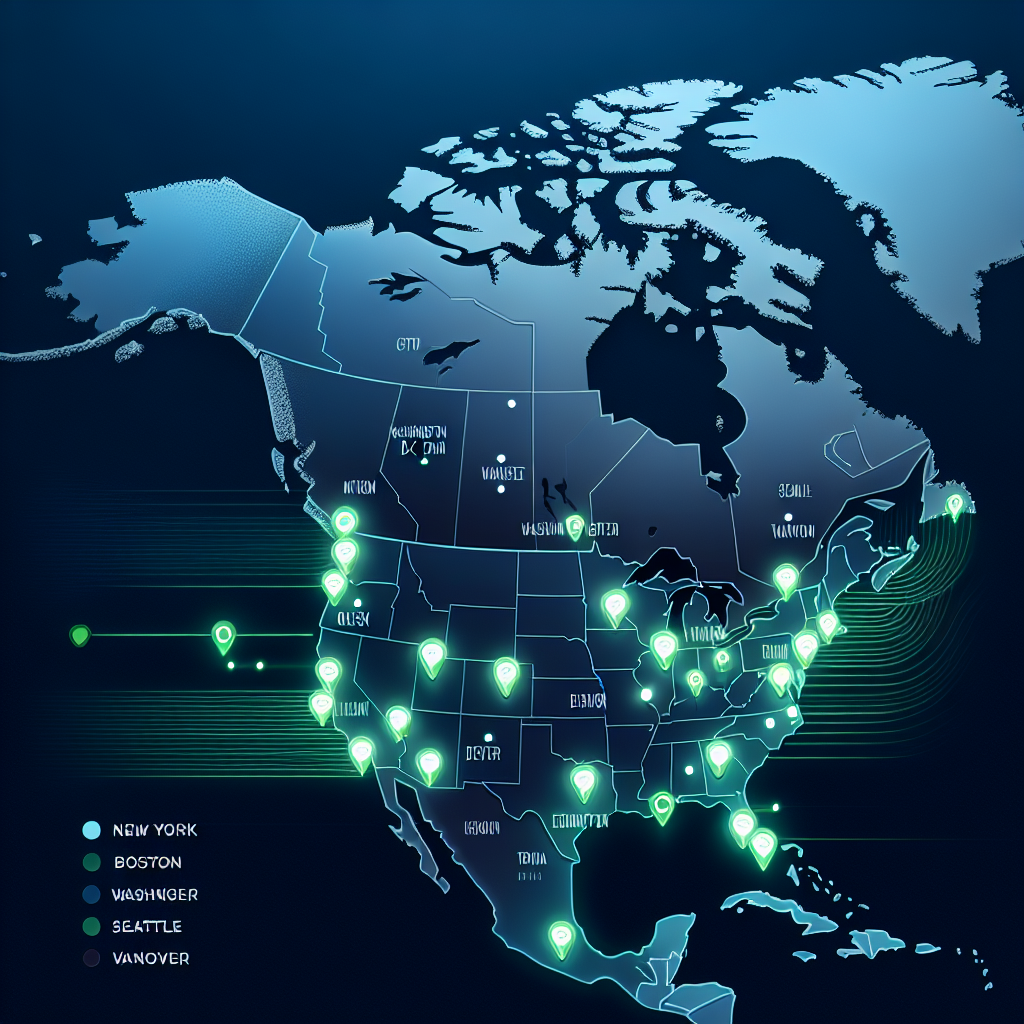
Over the past five years, Building Performance Standards (BPS) have moved from aspirational policy to hard law in fourteen major North American cities. These laws require covered commercial buildings to meet progressively tighter emission or energy caps — or pay substantial fines. For CRE brokers, lenders, and owners, understanding the BPS landscape is no longer optional.
This guide gives a clean side-by-side of the major BPS laws in force today.
New York City — Local Law 97 (LL97)
- Scope: Buildings over 25,000 sq ft.
- Metric: Carbon emissions (tCO₂e per sq ft per year).
- Compliance periods: 2024–2029, 2030–2034, 2035–2049, 2050+.
- Penalty: $268 per ton CO₂e over cap, annually.
- Reporting: Annual benchmarking by May 1.
- Typical broker impact: Most significant BPS exposure in North America due to NYC's building stock size. Many Class B offices face $50,000–$500,000 annual fines in 2030.
Boston — BERDO 2.0
- Scope: Buildings over 20,000 sq ft (non-residential) or over 35 units (residential).
- Metric: Carbon emissions (kg CO₂e per sq ft).
- Compliance periods: Every 5 years starting 2025. Net-zero required by 2050.
- Penalty: $234 per ton CO₂e over cap.
- Reporting: Annual disclosure.
- Distinctive feature: Strong "equity provisions" giving flexibility to lower-income buildings and those with historic constraints.
Washington DC — BEPS
- Scope: Buildings over 50,000 sq ft currently; tightening to 10,000 sq ft by 2027.
- Metric: ENERGY STAR score (not emissions directly).
- Compliance periods: Every 5 years. First full compliance cycle 2021–2026.
- Penalty: $7.50 per sq ft or alternative compliance payment, significant.
- Distinctive feature: Uses percentile-based ENERGY STAR benchmarks rather than absolute carbon. A building must hit a specific score threshold relative to its property type nationwide.
Denver — Energize Denver
- Scope: Buildings over 25,000 sq ft.
- Metric: Energy Use Intensity (EUI, kBtu/sq ft).
- Compliance periods: Interim targets 2026 and 2030, full compliance 2030.
- Penalty: $0.30–$0.70 per kBtu over target, compounding.
- Distinctive feature: EUI-based rather than emissions-based, which means building electrification alone does not guarantee compliance — overall energy reduction is required.
Seattle — Building Emissions Performance Standard
- Scope: Buildings over 20,000 sq ft.
- Metric: GHG emissions (tCO₂e per sq ft).
- Compliance periods: Every 5 years starting 2027.
- Penalty: Up to $10 per sq ft annually for non-compliance.
- Distinctive feature: Heavy reliance on Seattle's already-low-carbon grid gives electrified buildings a structural advantage.
Toronto — EWRB (Energy and Water Reporting and Benchmarking)
- Scope: Buildings over 50,000 sq ft (tightening over time).
- Metric: Disclosure first, mandatory performance targets being phased in.
- Compliance periods: Annual disclosure now; performance standards rolling out 2025–2030.
- Penalty: Fines for non-disclosure; performance-based penalties coming.
- Distinctive feature: First major Canadian city to move toward mandatory performance standards rather than pure disclosure.
Ontario — EWRB (provincial)
- Scope: Buildings over 50,000 sq ft across Ontario.
- Metric: Disclosure (energy use, GHG).
- Compliance period: Annual benchmarking required.
- Penalty: Provincial fines for non-disclosure.
- Status: Disclosure-only currently, but structural foundation for future performance standards.
Montreal — Municipal GHG disclosure
- Scope: Large commercial and institutional buildings.
- Metric: GHG emissions.
- Status: Disclosure framework established; performance standards in development.
Other US cities with active BPS or benchmarking
- St. Louis — BEPS-style regulation.
- Chicago — benchmarking ordinance with BPS under consideration.
- Los Angeles — EBEWE (Existing Buildings Energy and Water Efficiency Program).
- Cambridge, MA — BEUDO (Building Energy Use Disclosure Ordinance).
- Montgomery County, MD — county-level BEPS.
- Atlanta — benchmarking disclosure.
- Minneapolis — benchmarking with BPS discussed.
The unified pattern
Despite different metrics (EUI, ENERGY STAR, carbon), all BPS laws share a common structure:
- Disclosure — annual benchmarking reports filed with a local authority.
- Targets — specific quantitative caps that tighten every 5 years.
- Penalties — financial fines that recur annually for non-compliance.
- Pathways — alternative compliance routes for historic buildings, affordable housing, and specific hardship cases.
A building in a BPS city will report every year, face increasing targets over time, and pay fines when it doesn't hit them. The specifics differ but the architecture is consistent.
How this changes CRE practice
Brokers — need a one-click answer for "what's the BPS exposure on this building?" across multiple cities. Manual research doesn't scale.
Lenders — increasingly require BPS compliance trajectories as part of underwriting. A non-compliant Class B in 2030 has a different risk profile than a compliant one.
Tenants — in BPS cities, tenants now commonly ask for emissions compliance status before signing. Lease structures are shifting to pass fines to tenants in many markets.
Owners — need a clear view across their portfolio: which buildings are at risk, in which cities, and at which compliance periods. Capital planning now runs on BPS timelines.
Cross-border portfolio complexity
Owners with assets in multiple BPS cities face a compounding complexity problem. A building in NYC reports against LL97 on a carbon basis. A building in DC reports against BEPS on an ENERGY STAR basis. A building in Denver reports against EUI. Each jurisdiction has its own reporting calendar, its own penalty structure, and its own alternative pathways.
Portfolios with 5+ buildings across 3+ BPS jurisdictions now typically need dedicated compliance infrastructure — either internal or outsourced.
Where this is going
The 2025–2035 decade will likely see:
- BPS adoption by additional major US cities (Chicago, Philadelphia, San Francisco, Miami all have active discussions).
- Canadian expansion to Vancouver and other provinces.
- A progressive tightening of limits across existing BPS cities toward 2030 and 2040 milestones.
- Integration of BPS status into CRE lending standards (both bank and CMBS).
- Tenant lease clauses becoming standard for emissions pass-through.
For any CRE professional working in these markets, BPS is not a regulatory side topic — it is becoming the spine of how buildings are valued, leased, and financed. The brokers and lenders who learn the laws now will be the ones still winning business in 2030.