Energy Revolution Ventures $50M Electrification Fund: What It Means for Your NYC Portfolio
A $50 million fund is targeting electrification upgrades across commercial real estate. Find out the math, the regulatory timing, and how it reshapes LL97 compliance for owners and investors.
"My client just signed an LOI on a 1970s Class B office in Midtown East. ENERGY STAR score is 58 and LL97 emissions are 5,200 tCO₂e for 2024‑2029. The seller says the new electrification fund will solve everything. Should we proceed?"
We walk the lobby at 11 am, clipboard in hand, while the building engineer points out the aging steam boiler and the lack of EV charging. The fund’s prospectus is on the table. My answer: the capital is real, but it won’t erase the math you already have. You still need a retrofit plan that brings emissions under the 4,250 tCO₂e limit for period‑1, otherwise the $268/tCO₂e fine (LL97 Article 320 – the penalty is $268 per excess tonne of CO₂e) hits you in 2027.
What the Fund Actually Offers
The fund supplies two product lines: (1) senior‑secured loans covering 70 % of eligible retrofit costs, capped at $30 million per property, and (2) equity co‑investments that take a 5‑10 % preferred return once the project hits the LL97 compliance threshold. The loan‑to‑value is calculated on post‑retrofit appraised value, not pre‑retrofit NOI, so you can lock in higher cap rates after the upgrade.
Energy Revolution Ventures’ $50 million fund provides up to $30 million senior‑secured loans per asset, targeting electrification projects that cut emissions below LL97 period‑1 limits.
How the Money Translates to Emissions Reductions
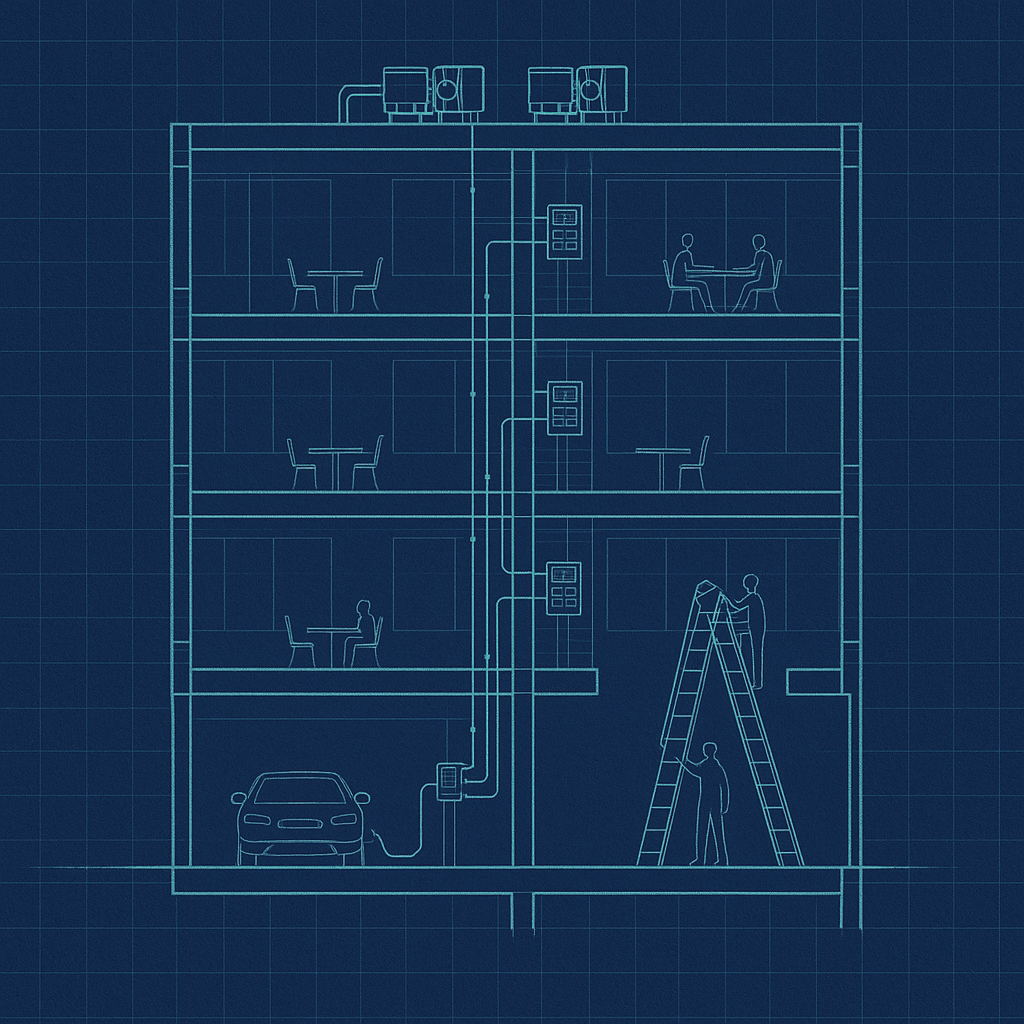
Take a typical 312,000 RSF Class B office built in 1978, similar to the Meridian Equity Partners deal in Q4 2022. Baseline ENERGY STAR score 58, baseline EUI (Energy Use Intensity — annual kBtu per square foot) 115 kBtu/ft², baseline emissions 5,180 tCO₂e. LL97 limit for 2024‑2029 is 4,250 tCO₂e. The fund would finance a package of electric heat pumps, a 1 MW rooftop solar array, and an EV‑charging infrastructure upgrade.
- Electric heat‑pump retrofit: $22 million (≈ $3,200/kW)
- Solar PV: $6 million (≈ $1,800/kW)
- EV charging: $2 million
Because the fund’s equity tranche only kicks in after the loan is repaid, owners retain full upside on the higher post‑retrofit valuation. The math works out to a 12 % IRR on the equity piece if the building achieves a 20 % NOI uplift from lower operating costs and higher tenant demand.
A $30 million retrofit package can cut a 5,180 tCO₂e asset to 3,800 tCO₂e, avoiding a $120 k LL97 fine and delivering a 12 % equity IRR.
LL97 Timing and Why the May 1 2027 Deadline Matters
LL97 reporting runs annually; the next deadline is May 1 2027, 214 days from today (2026‑09‑28). Period‑1 emissions are measured against the 2024‑2029 ceiling. If you miss the deadline, the city will assess penalties retroactively for each tonne over the limit, using the $268/tCO₂e rate set in Article 320. Period‑2 starts in 2029 and tightens limits by roughly 40 % (NYC Local Law 97, 2023 amendment). That means a building that barely makes period‑1 will likely be non‑compliant in period‑2 unless you plan beyond the first five years.
Do NOT assume the fund solves period‑2 compliance. The same retrofit that gets you under 4,250 tCO₂e may leave you at 2,600 tCO₂e, still above the 2,550 tCO₂e period‑2 cap for a comparable asset. You’ll need additional measures—perhaps battery storage or deeper envelope upgrades—to stay compliant.
LL97 period‑2 (2029‑2034) drops limits ~40 %, so a retrofit that only meets period‑1 may still breach the next cycle.
What the Industry Gets Wrong About “Just Pay the Fine”
There’s a persistent meme on LinkedIn: "LL97 penalties are a cost of doing business; just budget $200k per building and move on." The math is flat‑wrong. A $200k fine assumes a 750 tCO₂e overage at $268/tCO₂e, but most non‑compliant assets in Manhattan exceed the cap by 1,000‑1,500 tCO₂e, pushing penalties into the $300‑$400k range. Moreover, lenders now require proof of compliance before refinancing CMBS tranches (see climate risk underwriting requirements). A fine does not repair the credit‑rating hit.
Owners who rely on cash‑in‑lieu (the Alternative Compliance Payment – ACP – a Boston mechanism that lets owners pay $234/tCO₂e instead of meeting the target) ignore the fact that LL97 has no cash‑in‑lieu option. The only way out is to cut emissions or face a statutory penalty.
LL97 offers no ACP; owners must reduce emissions or pay $268 per excess tonne, making “just pay the fine” a costly gamble.
This Does NOT Mean Your Asset Is Safe After One Retrofit
Hitting the LL97 2024‑2029 limit does NOT guarantee compliance through 2034. The regulation’s Phase‑2 limits are stricter, and the city’s enforcement engine is ramping up—notice the recent DEP action against a 2005 office tower that missed the 2025 deadline (DEP Enforcement Action, 2026). If your retrofit plan stops at period‑1, you’ll face a new compliance gap in four years, forcing another round of capital outlays or higher penalties.
Smart owners bundle the fund’s loan with a longer‑term capital plan: combine the initial heat‑pump upgrade with a phased envelope retrofit (window upgrades, insulation, lighting) that spreads cost over five years but keeps emissions under both period‑1 and period‑2 caps.
Meeting period‑1 limits does NOT protect against stricter period‑2 caps; a phased retrofit strategy is essential.
For a deeper dive into how other jurisdictions handle similar compliance financing, see our guide on BERDO: Boston's Building Emissions Rule Explained for Brokers and the broader Building Performance Standards Explained post.
Bottom Line for Operators
If you have a building that is within 10‑15 % of the LL97 limit, the Energy Revolution Ventures fund can bridge the gap with a senior loan that pays for the retrofit upfront and preserves cash flow. If you are already 30 % over, you’ll need a larger equity infusion or a phased approach—this fund alone won’t cover the shortfall.
Ask yourself: does your current emissions baseline leave you with a $200k‑$400k penalty risk for 2027, or can you lock in a $30 million loan that eliminates that risk and adds $5‑$7 million in NOI over the next five years? The answer will dictate whether you move forward with the LOI.
Frequently Asked Questions
How much capital is Energy Revolution Ventures allocating to electrification?
The fund totals $50 million, with $35 million earmarked for direct retrofit loans and $15 million for equity co‑investments in electrification projects.
Can the fund be used to cover LL97 penalties?
No. The fund is strictly for capital expenditures that reduce emissions. Penalties must be paid out of pocket or via other financing structures.
What is the typical cost per kW for an electric heat‑pump upgrade in a Class B office?
Industry benchmarks place the installed cost between $2,500 and $3,200 per kW, depending on building vintage and existing infrastructure.
When does LL97 period‑2 start and what are the new limits?
Period‑2 runs 2029‑2034. Limits drop roughly 40 % versus period‑1, so a 300,000‑RSF office that could emit 4,250 tCO₂e in period‑1 must stay under about 2,550 tCO₂e in period‑2.
Is the fund available to owners outside of New York?
Yes, but priority is given to assets in jurisdictions with performance standards like NYC LL97, Boston BERDO, and DC BEPS, where the emissions reduction payoff is most immediate.